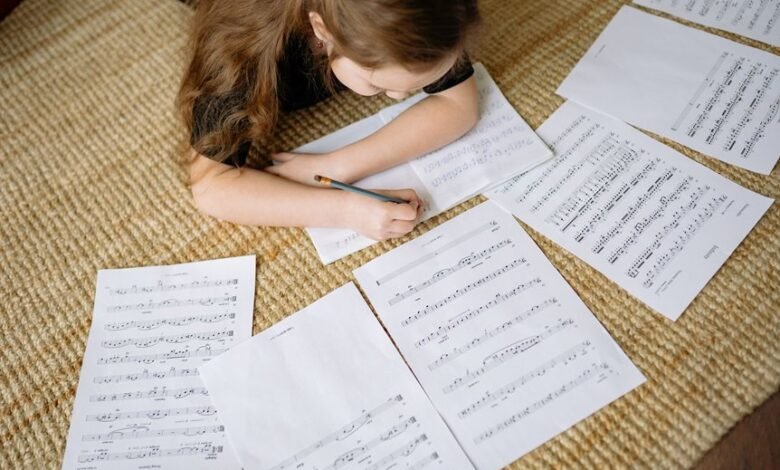
Music education offers structured pathways to creativity and learning, emphasizing rhythm-based practice, improvisation, and reflective listening. It builds metacognition, strengthens memory through multisensory encoding, and supports transfer across subjects. Inclusive repertoires and equitable spaces empower diverse voices, while clear roles and collaboration foster shared ownership. Adaptive practice and observable progress sustain motivation and autonomy. The approach invites educators to consider practical, scalable steps that keep students engaged—and the next move may hinge on a single, deliberate shift.
How Music Unlocks Creative Thinking in Students
Music education cultivates creative thinking by engaging students in pattern recognition, improvisation, and reflective listening. The process reframes challenges as collaborative experiments, inviting learners to test ideas, compare outcomes, and adapt transparently. Mindful listening sharpens perception of nuance, while melodic memory anchors evolving motifs. Through shared inquiry, students develop flexible problem-solving, fostering autonomy, resilience, and a communal sense of artistic exploration.
Music’s Role in Memory and Academic Performance
Music education is linked to memory-boosting benefits through rhythmic repetition, mnemonic strategies, and multisensory encoding that reinforce retention.
This section also examines how improved recall and process-based learning relate to broader academic performance across subjects.
The discussion invites collaboration among educators, researchers, and students to identify practical approaches that strengthen memory support and measurable academic outcomes.
Memory-Boosting Benefits
Research across educational settings indicates that music training can bolster memory processes, supporting both short-term retention and long-term recall critical to academic performance. The discussion highlights memory rehearsal as a practice that strengthens retrieval routes, while cognitive scaffolding guides learners to organize material musically and verbally. This collaborative approach invites exploration of strategies that nurture durable, flexible memory without constraining curiosity.
Academic Performance Link
Academic performance benefits emerge when memory-enhancing practices cultivated in music education transfer to classroom tasks. This linkage highlights how rhythmic training, pattern recognition, and sustained attention support recall and problem-solving across subjects.
Creative collaboration within ensembles models adaptable study strategies, while consistent classroom routine reinforces transfer. Educators can leverage these insights to design tasks that nurture memory, emphasis, and long-term achievement.
Rhythm and Collaboration: Building Teamwork in the Classroom
A classroom rhythm exercise can illuminate how synchronized effort strengthens teamwork, as students listen, adapt, and respond to one another in real time.
Through guided percussion activities, the group discovers rhythm collaboration as a shared responsibility, coordinating patterns and cues.
This approach highlights teamwork rhythm, fosters trust, clarifies roles, and invites reflective practice, reinforcing creative problem solving within collaborative learning environments.
From Ear to Mind: Listening Skills That Transfer to Learning
Active listening skills translate from musical practice to classroom tasks by sharpening focus and interpretive accuracy. The discussion centers onActive Listening Transfer and Focused Listening Skills, which help students extract meaning, monitor cues, and apply listening strategies across subjects. By coordinating listening with attention and collaboration, learners transfer perceptual habits from ear to mind to enhance understanding and problem solving.
Active Listening Transfer
Active listening is more than hearing; it is a disciplined practice that translates auditory input into cognitive insight, supporting learners across subjects.
In this framing, students cultivate awareness of patterns, rhythms, and cues, then apply these insights to new contexts.
This active listening fosters transfer learning by linking listening habits to memory, analysis, and problem-solving, encouraging collaborative exploration and creative adaptability.
Focused Listening Skills
Focused listening skills translate auditory input into purposeful cognition, helping learners filter extraneous noise and zero in on relevant details that support comprehension across disciplines. In this focus, students cultivate disciplined attention, interpretive nuance, and the patience to compare ideas, textures, and patterns. This practice nurtures focused listening and creative thinking, empowering collaborative inquiry and self-directed exploration within music and broader learning contexts.
Improvisation as Problem-Solving Practice
Improvisation serves as a practical form of problem solving in music education, inviting students to identify a musical goal, assess available resources, and choose a strategy under time constraints.
Within classrooms, improvisation problem solving cultivates melodic creativity, encouraging peer feedback, reflective practice, and shared responsibility.
Learners experiment, connect techniques, and refine ideas collaboratively, fostering autonomous, expressive musical thinking aligned with creative freedom and purposeful learning.
Cross-Disciplinary Connections Through Music
Cross-disciplinary connections through music reveal how auditory learning reinforces, and is reinforced by, other fields.
This perspective frames classrooms as collaborative laboratories where Cross disciplinary inquiry thrives, guiding learners to map patterns between sound, math, literacy, and science.
Instruction emphasizes music integration as a practice, not a subject, fostering agency, curiosity, and shared problem-solving across disciplines for creative, independent thinking.
Metacognition and Reflection Fostered by Music Activities
Music activities cultivate metacognition by making learners explicitly examine their thinking processes as they perform, listen, and reflect.
Through guided listening and collaborative rehearsal, participants engage in metacognitive reflection, identifying strategies, assumptions, and gaps.
This process supports reflective practice, enabling adjustments that deepen understanding and foster creative problem solving while maintaining an exploratory, freedom-oriented learning environment.
Motivation, Focus, and Self-Regulation via Regular Practice
Regular practice cultivates motivation, focus, and self-regulation by establishing consistent routines, clear goals, and measurable progress. In this view, learners collaborate with teachers to identify motivation strategies and implement adaptive schedules, ensuring steady momentum.
Focus techniques are shared and refined through feedback loops, short-term milestones, and reflective check-ins, cultivating autonomy.
The result is purposeful, resilient engagement that sustains creativity, learning, and growth.
Accessibility and Inclusivity: Music for Diverse Learners
Accessibility and inclusivity in music education empower diverse learner voices by illuminating multiple entry points and pathways to creativity. By prioritizing inclusive access and actively seeking diverse perspectives, educators can design meaningful experiences that honor different backgrounds, abilities, and communication styles. This collaborative approach invites ongoing dialogue about best practices, resources, and adaptations that support every learner’s creative potential.
Inclusive Access Ways
Inclusive Access Ways focuses on creating equitable opportunities for all learners to engage with music, regardless of ability or background.
The approach emphasizes collaborative planning, shared responsibility, and practical strategies that respect autonomy.
Practitioners leverage inclusive access and adaptive technologies to tailor experiences, nurture curiosity, and support diverse styles.
Goals center on participation, confidence, and transferable skills across ensembles, curricula, and informal learning contexts.
Diverse Learner Voices
Diverse Learner Voices centers on ensuring that the perspectives and preferences of all learners shape music education. Programs invite diverse voices and flexible formats, honoring varied backgrounds while supporting autonomy. Teachers scaffold accessible paths for creative exploration, enabling cultural expression through inclusive repertoire, adaptive assessment, and collaborative projects. This approach fosters equity, curiosity, and shared ownership, enriching learning environments for every student.
Quick, Practical Strategies to Implement Today in Any Setting
Quick, practical strategies can be implemented immediately in any setting by focusing on small, repeatable actions that spark curiosity and collaboration.
In practice, teachers cultivate improvisation strategy through quick prompts and peer feedback, while rhythm based assessment tracks progress with simple claps, taps, or pulse checks.
The approach remains collaborative, autonomy-supportive, and adaptable to diverse environments and learners.
Frequently Asked Questions
How Can Music Education Support Creative Risk-Taking in Students?
Creative risk taking is fostered when students explore improvisation, peer feedback, and low-stakes experiments; Musical experimentation becomes a collaborative process that values curiosity, resilience, and reflective practice, guiding learners to seize opportunities, recalibrate mistakes, and sustain fearless curiosity.
What Role Does Music Play in Linguistic Development and Literacy?
Music supports linguistic development by strengthening auditory processing and phonemic awareness, contributing to reading fluency through rhythmic decoding. It offers collaborative, insightful practice that invites learners to explore sound-symbol connections, fostering autonomy while teachers guide structured, creative literacy growth.
How Can Teachers Assess Creativity Growth in Music Programs?
“Creativity grows through structured observation.” Teachers assess creativity growth in music programs via creative assessment and performance portfolios, emphasizing iterative feedback, collaborative peer review, and clear rubrics that honor risk-taking, reflection, and diverse musical expressions within an empowering, freedom-centered practice.
Can Digital Tools Expand Accessibility Without Compromising Engagement?
Digital tools can expand accessibility while preserving engagement through thoughtful design and universal access. They support digital inclusion and provide clear engagement metrics, guiding collaborative adjustments that honor learner autonomy and foster creative exploration beyond traditional classroom constraints.
What Strategies Foster Family and Community Involvement in Music Learning?
Community partnerships and family engagement emerge as key strategies, enabling shared goals and resource pooling. The approach is insightful and collaborative, inviting families and neighbors to co-create learning moments while educators facilitate flexible, freedom-oriented musical experiences for all learners.
Conclusion
Music education acts as a catalytic companion in the learning journey, weaving creativity into daily practice and academic effort. By integrating listening, collaboration, improvisation, and reflection, classrooms become laboratories of growth where students co-create meaning and adapt strategies. This approach fosters ownership, resilience, and transferable skills across subjects. Like a well-tuned orchestra, a well-supported program harmonizes diverse talents, turning curiosity into sustained achievement and turning every learner into a collaborator in the shared pursuit of understanding.