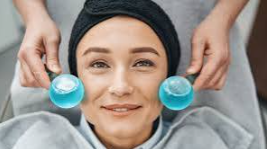
Facial massage is hardly a new idea, yet the way people encounter it today feels distinctly modern. Techniques that might once have been learned from a beautician, passed between generations or experienced during an occasional spa treatment can now appear within seconds of opening a social media app. Short videos demonstrate sweeping movements across the jaw, cooling rollers are shown gliding beneath the eyes, and skincare creators regularly include massage tools alongside cleansers and serums.
The internet has not invented facial massage, but it has dramatically changed its visibility. What was once a relatively niche element of beauty care has become part of mainstream skincare conversation, helped by visual platforms, online shopping and an appetite for routines that people can reproduce at home.
Beauty Became Easier to Demonstrate
Some beauty ideas are particularly well suited to the internet because they can be demonstrated quickly. Facial massage is a perfect example. A lengthy explanation is not always necessary when viewers can simply watch someone move a tool across their face and follow the technique themselves.
Video has therefore removed one of the traditional barriers to learning. Written instructions such as “massage upwards along the jawline” can be interpreted in several ways, whereas a short clip immediately shows direction, pressure and hand position. That accessibility has helped massage techniques reach people who might never have considered booking a professional facial.
It has also encouraged experimentation. Someone may see a technique while browsing social media in the evening, try it during their skincare routine and decide whether it feels worthwhile. The gap between discovering a beauty practice and actually trying it has become extremely small.
See also: About Datrihelminen Life
Skincare Content Became Entertainment
Another important change is that skincare is no longer presented purely as practical advice. It has become a substantial category of entertainment in its own right.
People watch bathroom routines, product-testing videos, beauty transformations and relaxing “get ready with me” content even when they are not actively looking for something to buy. Facial massage works particularly well within this environment because it is visually satisfying. Repetitive movements, attractive tools and carefully arranged skincare products make easy material for short videos.
This has changed how beauty trends spread. A person does not necessarily need to search for facial massage specifically. They might encounter it while watching unrelated skincare content and gradually become familiar with the idea simply because it appears repeatedly in their feeds.
Once enough creators incorporate something into their routines, it can begin to feel like a normal part of skincare rather than a specialist treatment.
Online Communities Accelerate Trends
Before social media, beauty trends generally moved through magazines, television, salons and word of mouth. Those channels could certainly create enormous trends, but the process was comparatively controlled. Today, almost anyone can demonstrate a technique or discuss a product publicly.
That creates a much faster feedback loop. One creator posts a facial massage routine, another adapts it, viewers ask questions, and further videos appear responding to those questions. Within days, a particular technique can generate hundreds of variations.
The downside is that information can spread just as quickly as the trend itself. Claims about skincare are not always carefully qualified, and dramatic promises may receive more attention than realistic ones. Facial massage can be relaxing and may temporarily help with the appearance of puffiness, but online content can sometimes imply much more permanent results.
Consumers increasingly have to distinguish between enjoying a beauty practice and accepting every claim made about it.
The Rise of the At-Home Beauty Tool
The growth of facial massage also sits within a much wider movement towards at-home beauty treatments. Consumers can now buy devices and tools inspired by treatments that were previously associated mainly with salons, spas or beauty professionals.
Online retail has made these products remarkably easy to discover. A person can watch a video featuring a facial roller, search for similar products immediately, read reviews and place an order without leaving the same device on which they discovered the trend.
That connection between content and commerce has been extremely powerful. Beauty trends no longer need to rely on customers remembering a product the next time they visit a shop. The path between curiosity and purchase can be only a few clicks long.
At the same time, online reviews give shoppers access to thousands of other people’s experiences. Buyers can compare different materials, designs and price points before deciding whether a particular tool belongs in their routine.
A Simple Idea Suits Complicated Times
There is another reason facial massage has performed well online: the concept itself is refreshingly straightforward.
Skincare can become complicated. Consumers hear about active ingredients, concentrations, skin barriers, exfoliation schedules and combinations of products that should or should not be used together. Facial massage offers something different. At its simplest, it involves spending a few minutes gently working across the face using the hands or an appropriate tool.
That simplicity can be attractive to people who feel overwhelmed by increasingly elaborate skincare routines. There is no need to introduce five new products at once. Massage can be incorporated into something they already do, perhaps while applying a serum, moisturiser or facial oil.
The relaxing aspect also fits neatly with the broader online interest in self-care. Beauty content increasingly presents skincare not merely as an attempt to alter appearance but as a small personal ritual at the beginning or end of the day.
Brands Have Helped Turn Tools Into Everyday Objects
As demand has grown, beauty brands have made facial tools easier to understand and more appealing to mainstream consumers. Companies such as SkinGym offer rollers, gua sha-inspired tools and other products designed specifically for at-home facial routines. Their visibility online has helped move these objects away from the margins of beauty culture and onto ordinary bathroom shelves.
Packaging and design have mattered as well. Modern facial tools are often presented as desirable lifestyle products rather than specialist equipment. That makes them easy to photograph, share and include in beauty content, further reinforcing the cycle between social media exposure and consumer interest.
Yet the underlying appeal remains relatively uncomplicated. People enjoy products that make an everyday routine feel a little more deliberate.
From Trend to Established Habit
Plenty of internet beauty trends disappear almost as quickly as they arrive. Facial massage has proved more durable because it is not tied to a particular viral product or fleeting aesthetic. People can change tools, techniques and skincare products while continuing the basic habit.
The internet has undoubtedly accelerated its popularity, but longevity depends on whether people continue finding the routine enjoyable. For many, the attraction is not dramatic transformation. It is the simple experience of slowing down, spending a few minutes on skincare and perhaps feeling slightly more refreshed afterwards.
That may explain why facial massage has moved beyond the status of an online novelty. Social media introduced millions of people to the practice, online retailers made the tools accessible, and beauty communities kept experimenting with different approaches.
The technology that popularised it may be modern, but the habit itself is remarkably simple. In an online beauty world constantly searching for the next innovation, that simplicity may be exactly why facial massage has managed to stick around.